St. Stephens's School Rome




Community Gateway
Back to GatewaySt. Stephens's School Rome
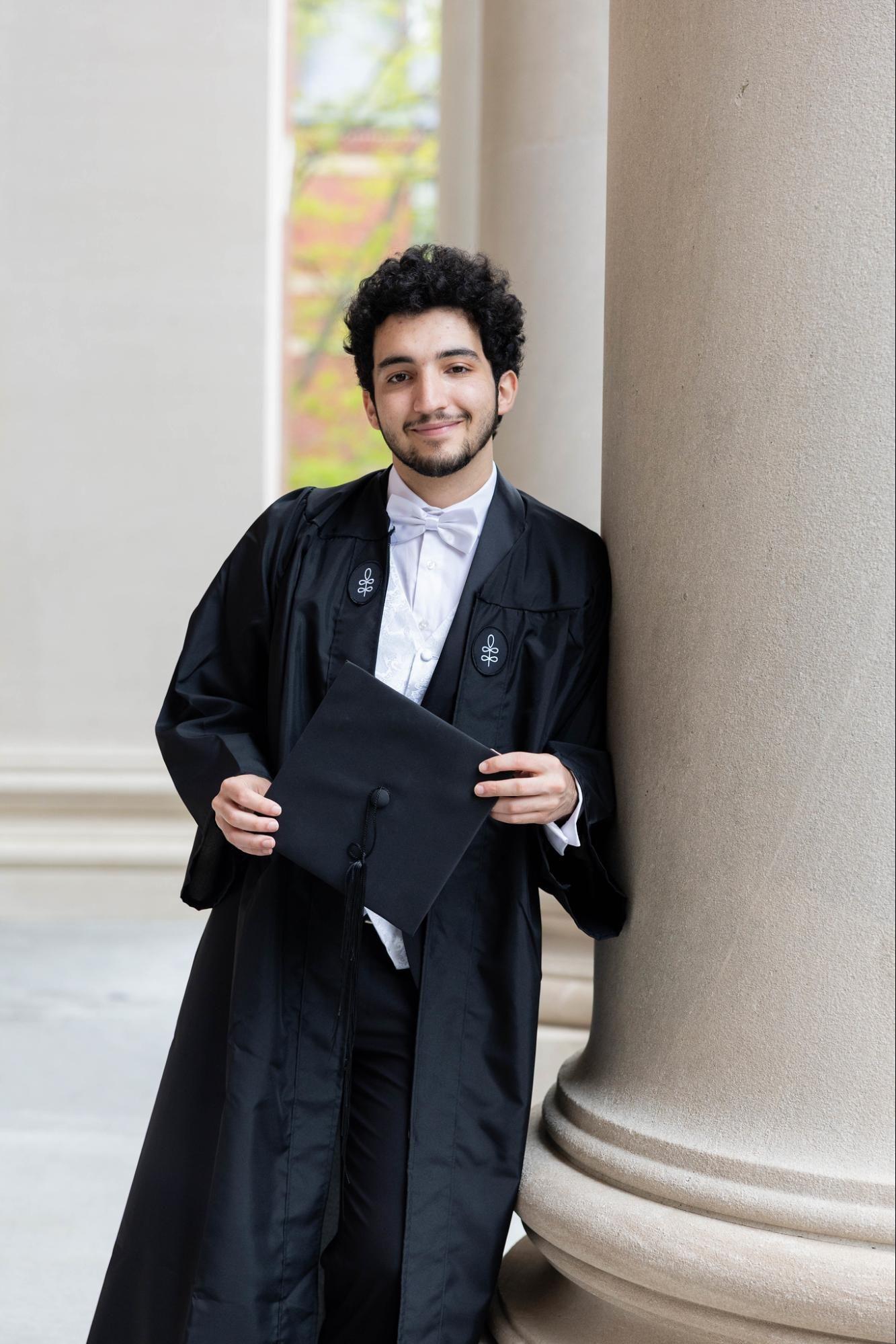
I'm part of the local fauna, having been born and raised in Rome. Precisely, I grew up in Ostia, and during my time at St. Stephen's, I had the pleasure of commuting an hour and a half each way due to this!
Quite simply, I came to St. Stephen's because it was the best high school in the city and the one my parents and I thought would afford me the best post-grad opportunities, given that I was interested in pursuing higher education abroad.
The COVID-19 pandemic hit right in the middle of my time in high school, so my memories are pretty U-shaped: I remember good chunks of freshman year, a lot of senior year, and only sparse episodes in between.
I have a lot of very fond memories of bonding with faculty, honestly—I think the structure of the academic program at St. Stephen's meant one knew most of the teaching staff quite well by the last few years, and I had several teachers whom I learned from for several years. Dr. Pastori, for instance, was my math teacher for three out of the four years, and eventually became my EE advisor, too; Cecilia's Italian literature classes are legendary for a reason, with Fabio and Rossano carrying the same torch during the IB, Dr. Leckie and Ms. Chemeissani for chemistry and physics, and Mr. Byck for economics. I have specific events I can recall from each of these courses that I still draw upon, and I believe they've influenced my way of thinking more than I can give them credit for.
If I had to pick a specific program, a lot of my most vivid memories of St. Stephen's are related to Ms. Di Cataldo's robotics program. Winning the RoboMed Robotics Competition in 2019 by building LEGO Mindstorms robots with friends; putting together a team that spanned across grades for the F1 in Schools World Finals, and having to work on everything from graphic design to running CFD simulations; learning Arduino and building a drone senior year. I think these are some of the projects that most strongly sparked my interest in tinkering with electronics, some of the most fun I'd had working in a team, and were something I looked forward to every semester.
I think the St. Stephen's community has followed me every step of the way, both intellectually and personally.
I actually ran into most of the basic ideas that my work is based on during my time at St. Stephen's! As a junior, I won the Harvard Book Prize, and the book I was given was Brian Christian and Tom Griffiths' Algorithms To Live By, a popular cognitive science book that got me interested in the ways we could apply logic and math to human behavior, and the applications of mathematical rationality to life. Similarly, I was given Nick Bostrom's Superintelligence by a teacher as a parting gift after senior year, and through it, I was introduced to many foundational ideas in AI safety that I still carry with me today (it still holds up; go read it!).
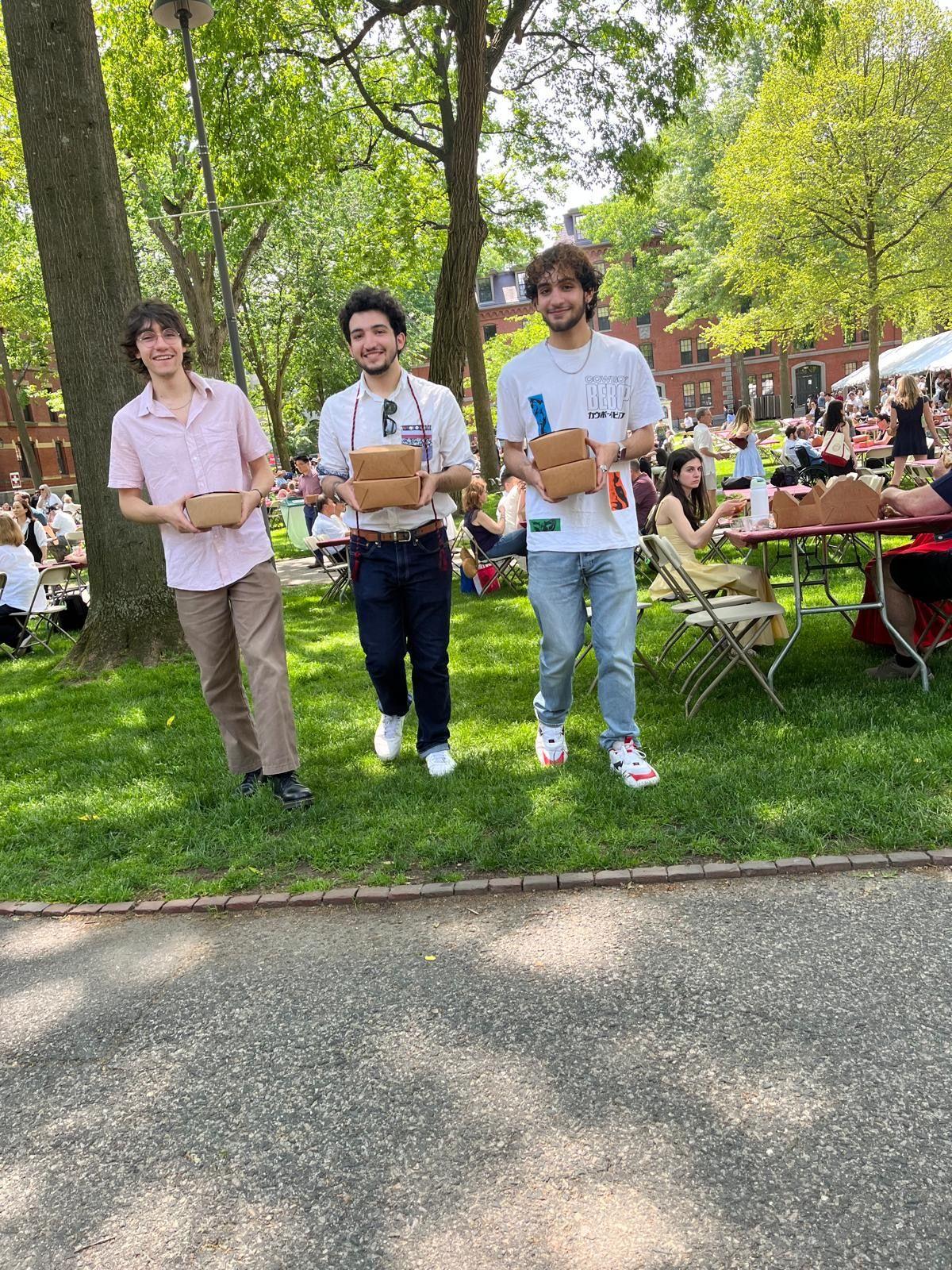
Personally, it seems like I am never more than a few miles from another St. Stephen's alumnus. When I got into Harvard, RC Sadoff '15 reached out to help me plan my first semester there and introduced me to some of the first people I knew in college. Coincidentally, Maxime Lamy '19 was also in Boston at the time, pursuing a degree at MIT. We occasionally hung out in the city, and we still keep in touch today. Natalie Silver '22, Lucy Silver '24, and I also saw each other in Boston, and Daniel Hugo Arnabal '22 and Tiziano Pepe '24 came to my college graduation. Finally, once I graduated and moved to San Francisco, I discovered I live quite close to Ilaria Chen '22.
So, between the ideas that got me interested in my work in the first place and the people who've accompanied me along the way, St. Stephen's has remained a bigger part of my life than I might have expected when I graduated.
If you have a hammer, everything looks like a nail. Throughout history, people interested in studying the brain have always based their studies on whatever the technology du jour was. In my case, it seems plausible that the brain operates like a massive (but incredibly efficient) computer, and I was interested in seeing how far that analogy would go, and what we could learn from it.
Specifically, I was drawn to this type of research through work on human language. Language is this phenomenal cultural technology that we still have a rather poor understanding of, and I was interested in knowing whether machines could be taught to speak it, too. I recall that COVID was a big part of my high school experience, so I have vivid memories of being stuck at home and playing with the GPT-3 playground in 2020, marveling at the fact that a pile of numbers could approximate human speech.
ChatGPT was also released three months into my undergrad, at which point the intersection of language, machine learning, and cognition became a lot more salient, as people suddenly started having genuine conversations with a machine on a daily basis, which was utterly unthinkable even just months prior. Knowing that, how could you not wonder whether it was capable of reasoning? What if we had already managed to make a digital brain?
Overall, I was in the right place at the right time—growing up bilingual, you also just think about language a lot, I think, so it was a natural thing for me to explore and I had a blast trying to make the most of it.
One of the most fun things about this line of research is that incredible parallels and incredible differences coexist.
The most interesting parallel, in my opinion, is the way both systems "think". When you train a language model, you teach it how to produce coherent sentences by having it constantly predict the next word, over and over, and over again. By doing this enough times, you indirectly also teach the model about the world: in order to know what word comes next in "the cat sat on the", the model needs to know that "mats" are things cats are more likely to sit on than "oranges", for instance. There's a strand of cognitive science research suggesting that the brain essentially works in the same way: constantly trying to predict what will happen next, and learning from its mistakes. I think this is pretty interesting: something as mysterious as human thought may just emerge from something as simple as predicting the next word...
At the same time, while the general mechanisms for reasoning may be similar in humans and machines, how both learn very much isn't. The most obvious example of this is the immense magnitude of data required to train these models: large language models only learn how to speak after seeing billions and billions of words, like reading every book ever written in history many times over. In contrast, humans only see a few million words in their lifetime, and we are so good at learning language that by the time you're five years old, you've probably already said a sentence no other human being has ever pronounced. How humans learn language, and how we could adopt similar processes in machines, is still a really important open question, and one that could be incredibly valuable from both a humanist and a technological perspective.
I think there are many possible answers here, and I'll try to give a relatively straightforward one.
When we train AI systems, the process by which we create them is more akin to growing an intelligence than to programming one—nobody knows how these systems work; they learn how to wire themselves up. Combine that with the fact that these models are getting scarily intelligent: they are superhuman at writing code and solving math problems, know more about any scientific field than any expert, and can call upon incredibly deep knowledge of any language, translation, or published book in the humanities. As these capabilities improve, they will increasingly be able to take consequential actions in the world, without us necessarily understanding why they're taking them or being able to predict what they'll do in unfamiliar situations. And, simultaneously, we're integrating these systems more and more deeply into people's lives, the economy, and other complex systems where their actions can have serious consequences.
We're learning how to make systems intelligent faster than we're learning how to make them understandable. It sure looks like it would be useful to know how they work and make sure they won't take rash decisions that will harm us!
I believe it's equally important to avoid millenarianism, though: there will not be a single point in time when we can declare everything won or lost, and making AI go well will continue to be a series of difficult and very consequential (but surmountable) challenges from here on out. This is why it's such an important issue to work on: it's an ever-changing, ever-salient issue, and getting it right will unlock prosperity and abundance on a scale we've never seen before.
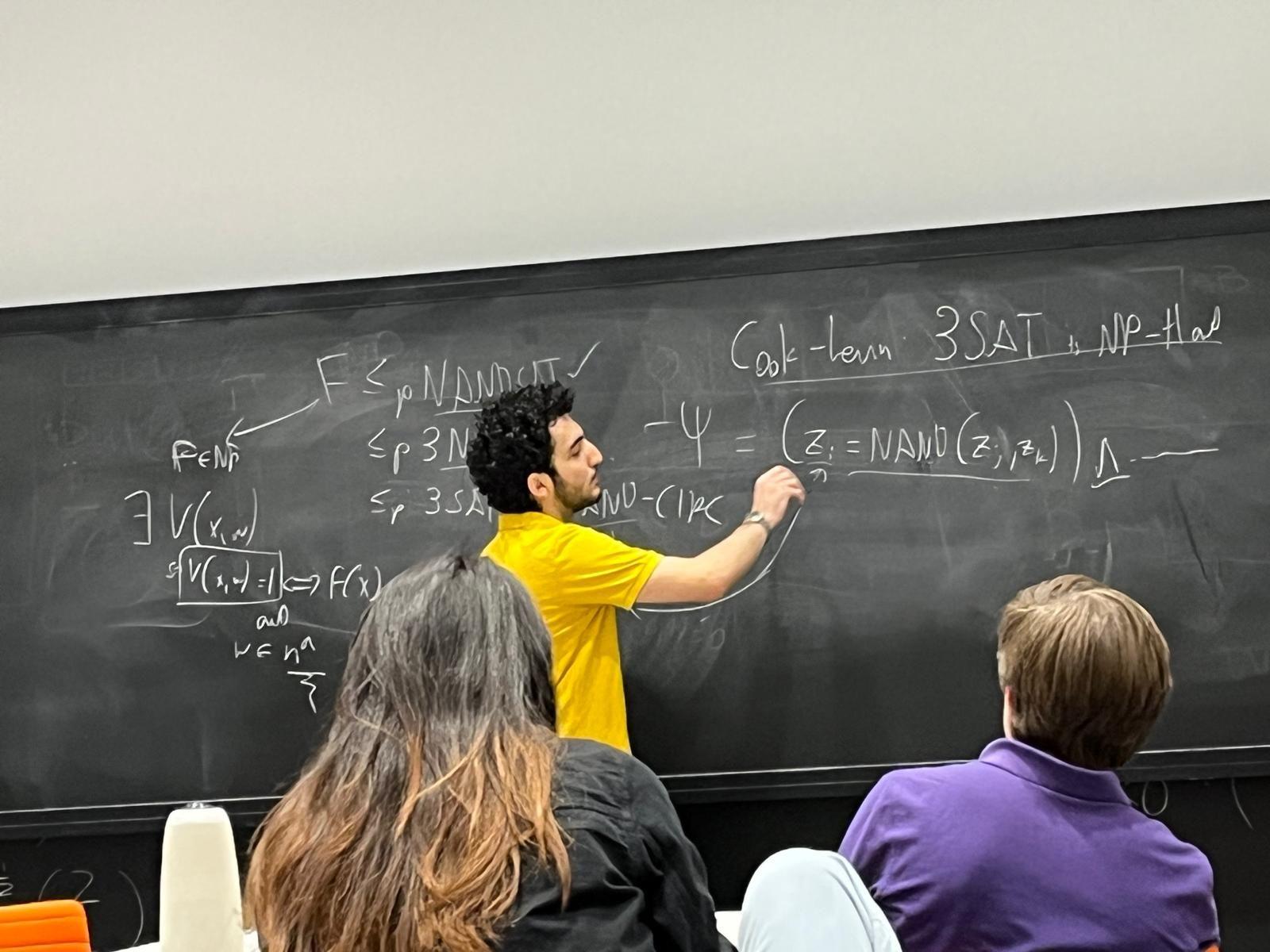
There are a couple of notions I've kept coming back to that I really like, and I think both have to do with keeping an open mind, to some extent.
First, research is not something that only researchers or scientists do. Literally everyone does research, runs experiments, and thinks about their results: it's how babies learn by running around touching things they shouldn't, and it's what you do when you plug your cable in and out of your phone to see if it's broken. This sounds a little silly, but it's important to think about if you're doing "science"—even if it may feel like you're siloed away in your ivory tower, you are participating in this tree of knowledge that spans thousands of years, billions of people, and takes in everything from complicated macroeconomic models to "touching the stove while it's hot is a bad idea". I think it's very important for researchers to be humble in light of new evidence, feedback, or other people's work, and this is a good way to stay grounded.
Second, I think the entirety of the act of doing research boils down to a simple question you should constantly be asking yourself: "What is the dumbest thing I can do right now that would bring this project forward?" This incentivizes you to keep things simple and easy to understand while ensuring you're making progress on the questions you're trying to answer. It's also a surprisingly hard question to answer: doing the dumbest thing may not always be the easiest thing, or the thing you want to do most, or the thing that you initially thought you would be doing, but it's usually by far the best thing you can do.
A project I really enjoyed working on that I don't get to highlight that often, since it's a little off the beaten path of academia, is an article I wrote with Nilesh Christopher, a reporter now at the LA Times, for Al Jazeera.
We saw that users of the social media platform Twitter/X were increasingly turning to large language models to fact-check politically contentious events, especially in the United States. We were curious to find out how many of these queries were being made per day (i.e., how many people were offloading their searches for truth to a chatbot?), and whether these were being made in good faith—if the chatbot eventually disagreed with you, were you willing to change your mind about the event, or would you just get mad at it?
This was a fun project because the methodology was pretty standard—collect human data and use machine learning models to try to make sense of it—but the dataset was so weird, being composed of these public arguments between people and machines, that it made the investigation much more enticing than I initially thought.
The results were really interesting, too: it turned out that several million people every day were calling Twitter's chatbot to fact-check their news, and that many were just trying to do so as a way of confirming their own preconceived biases about the events, not actually trying to dig into what the truth was. It was fairly eye-opening: the chatbot said something (sometimes hallucinating a totally incorrect fact), humans would yell at it, the chatbot replied again, and this continued until the truth was lost in the details of a thousand tweets.
I think the biggest lesson for me was that making information easier to access doesn't necessarily make people more interested in finding out what's true. As AI becomes increasingly integrated into how we understand the world, figuring out how to make these systems tools for understanding rather than just more sophisticated ways of confirming our biases will be an incredibly important challenge.
I'm particularly proud that we got to document this phenomenon as it happened, because it was one of the first mainstream news articles on AI safety-adjacent investigations, and because I suspect these questions will only become more important over time.
First of all, don't be a stranger! The St. Stephen's community is a great one, and there are plenty of people, myself included, who want you to succeed and would be more than happy to help you.

Other than that, I think you should be bold and pick really ambitious problems to work on. There has never been a better moment to have really hard questions to ask and want to solve. In the same way that students and researchers in the '80s and '90s first started having access to the Internet, you now have access to these amazing tools that can take you much further than anything could previously, so you will be able to do incredibly interesting research that was previously impossible. The world is your oyster; you don't have to wait until you're an established, "senior" or "seasoned" researcher to work on important or interesting problems—as they like saying here in San Francisco, "you can just do things"!
There are still many, many mysteries to cognition, language, and the study of the human mind generally, and I am hopeful that we will be able to solve many of them within my lifetime (selfishly, I'm really curious to know what their solutions will look like!). But doing so will require a healthy supply of new ideas and new people to work on them, and I hope some of those people will be you.