St. Stephens's School Rome




Community Gateway
Back to GatewaySt. Stephens's School Rome
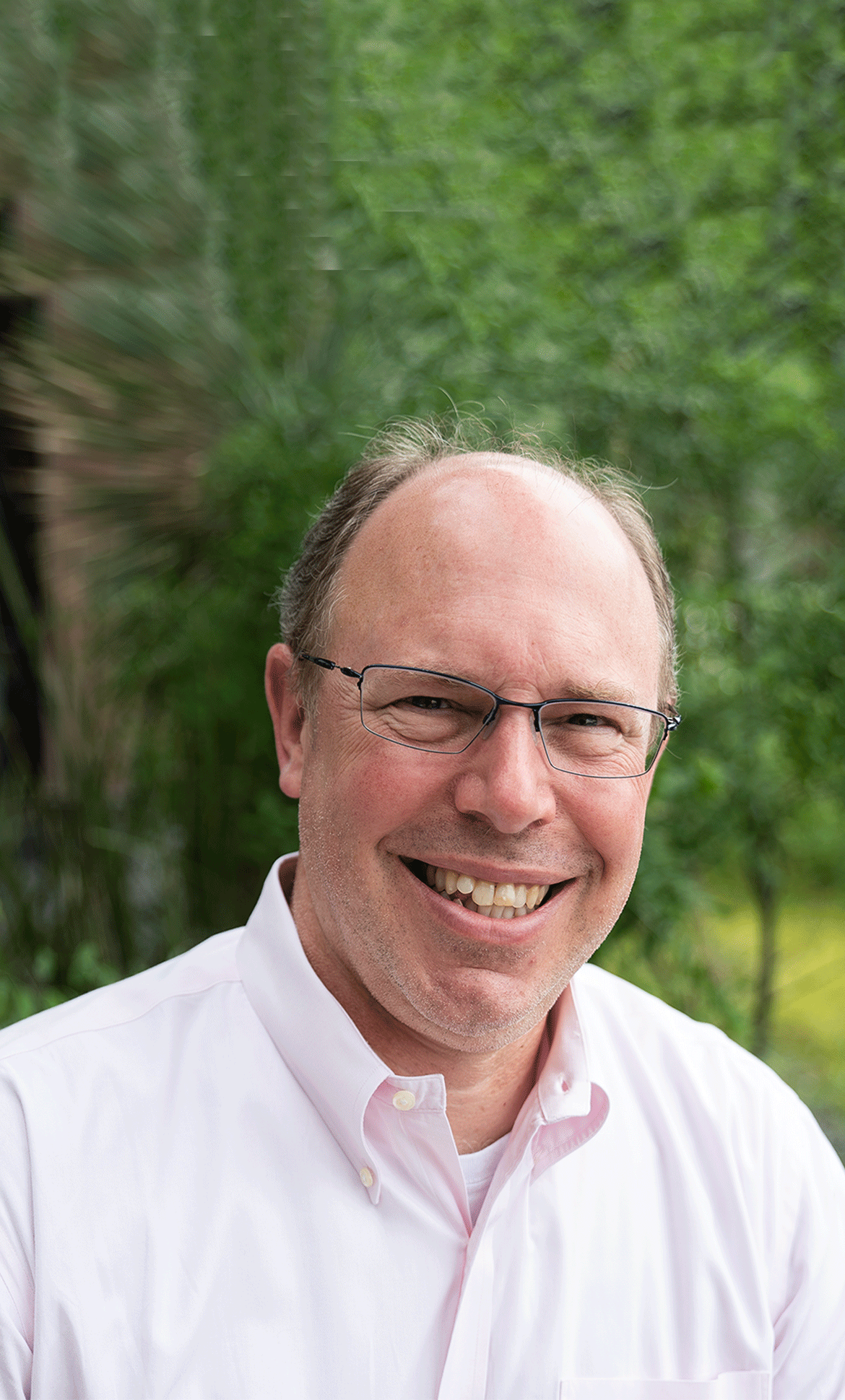
Could you talk a bit about where you're from? What brought you to St. Stephen's? Do you have any fond memories of your time here?
So, I wouldn't say I'm from anywhere. I was born in the U.S. and left when I was six weeks old. I pretty much moved every three or four years and lived in lots of different places in the world. So, when people ask me where I'm from, I say I'm from Rome, just because it's the place that ended up meaning the most to me and where I spent the most time when I was younger.
What brought me to St. Stephen's was that, because I'd moved a lot, I'd gone to a lot of international schools, always in English. My dad was Italian and retired back to Italy, deciding to move to Rome. When we looked at places for me to go to high school, St. Stephen's was at the top of the list. I ended up enrolling there and commuting, so I was not a boarder.
Do I have fond memories? I have a million fond memories of St. Stephen's. I think, still to this day, some of the closest friendships that I have were with students that I attended St. Stephen's with. The best man at my first wedding was a student from St. Stephen's. Everything about living in Rome and being in a small environment... when I graduated, I think there were maybe 32 people in my graduating class, so you got to know everybody in the school really well. The teachers—lots of teachers, but specifically Mr. Ullman—was probably a hugely impactful teacher for me. It was just a home away from home. I kind of regret that none of my kids are gonna be able to go there, but I think it was an amazing place.
Then, after high school, where did life bring you?
So, actually, I started at LUISS, in Rome, the Italian University in Rome, and I really found that I did not thrive in the environment. The learning style was so radically different than what I had experienced at St. Stephen's, which was super interactive with lots of attention from teachers. To go from there to an Italian-based system, which was almost 100% lecture and only one oral examination at the end of the semester, it just really didn't fit well. Since I was half American, it felt like a good opportunity to maybe try to live in the U.S. for the first time in my life as an adult. So I transferred into the University of Texas at Austin, moved to the States, and obviously have never left Austin. So, that was a long time ago, but yeah.
Starting from the beginning, what drew you to the startup world after university, and what kinds of companies were you building in those early years?
So, this is pretty interesting. My dad wanted me to be an investment banker, and I got a finance degree. I remember just thinking, during a final round of interviews with some investment banks in New York, how that sounded like the worst possible existence I could ever imagine. So, when I got back to Austin, I just proudly informed my dad that I was not gonna be an investment banker or a finance guy. I wasn't sure what I was gonna do, but I was gonna be my own boss and start businesses.
The first business I started, with no experience, went, as you might imagine, just terribly. But then I went back to grad school and grew up a little bit, and then started some much more successful and good businesses. I realized I needed other people who were good at different things around me, and that I couldn't do everything. I started businesses always around technology, in the technology space—software, hardware, consulting—and ended up having a really, really good run of startups, doing what I wanted to do and what I was passionate about.
You said that you love being your own boss the most, the entrepreneurship. What are the struggles? What are some of the toughest lessons you learned as a founder?
Yeah, it's interesting. There's a lot of value and personal satisfaction in building and growing something from nothing. Honestly, in a lot of ways, it's like parenting. There's just a lot of personal satisfaction in watching your kids grow and doing what you can to help them. I got the same vibes and feelings from growing companies.
The downside is that it's a lot of pressure. As you start to grow, you feel a responsibility to your investors, employees, and customers, and you want to shoulder the burden of making sure that you're doing right by everyone. But I never felt like the pressure wasn't rewarded by a lot of gratification and knowing that you were as much in control of your own destiny as you could be. Let's put it that way.
The other thing I loved about startups—and I'll give you the downside on this too—was that most companies start small, so there's no room for underachievers. Typically, at smaller companies, you're surrounded by exceptional performers and exceptional minds. That's really exciting, challenging, and fun. The downside is, those kinds of folks typically don't have an on-off switch, so you're pretty much constantly thinking about the business, talking to somebody about the business, wanting to do something. It's fun, but it's not super conducive to family life or life outside of the startup. It sort of becomes all-consuming.
You mentioned you're really interested in tech companies. Was there anything in particular about what drew you to tech?
Well, I'm gonna completely date myself, but when I was growing up, it was the era when the personal computer was introduced. I just remember, at St. Stephen's and in middle school before that, having some of the first desktop computers, and then ultimately our first laptop. Just being able to think about what these things called computers could do was really, really cool. From when I was younger, I was just always into trying to program it, or play a game. That just kind of got me addicted to the tech field. Honestly, regardless of what career I've been doing, that's never left. My passion for technology, and my desire to always learn about what's new in tech has not left me. It just started with my first Commodore VIC-20 computer, with 16K of RAM, and it just kind of evolved from there.
You also mentioned the Aventine Hill Travel Company. Do you still work on that?
So, that's one of the things I work on now. My oldest son Nico and I run it. It's kind of a full-circle return to the startup world, but in a different way, without the pressure of external investors or trying to make a billion-dollar company. It's a lifestyle business, and it's a business where we get to do something we really love, which is help other people fall in love with Italy and love it as much as we do. It's just been very rewarding on so many levels. It's helped me...I always had a connection with Italy, but formally reconnect, and do more and more, and have more and more reasons to go back multiple times a year. I find that the country is drawing me home more and more strongly the older I get.
It's been really cool to work with people and help them make amazing lifelong memories, and realize there's more to Italy than just Rome, Florence, Venice—check the box, you're done travel. And then it's also just been super cool to spend a lot of time with my oldest, my 24-year-old son, building a business together and working on a project with him, and see him start to grow in his love for Italy as well. So, there's a lot more to that, but spending more and more time on the Aventine Hill Travel business has been really cool.
Aventine Hill Travel is probably the most meaningful thing I've ever done because it brings a lot of things that I'm interested in together. It allows me to work with family. It allows me to make a difference for others and help them create a bond and love for Italy that I also have. It reconnects me with Italy and allows me to be an entrepreneur again. So it's all these things together.
We chose Aventine Hill as the name because of the special meaning it has for me. St. Stephen's is on the Aventine, so I wanted to pay deference to the high school that made such a formative difference for me. It's really cool that Aventine Hill is part of the origin legend of Rome. I like the idea of it being the first intro to Rome. I'm sure you've been up there to look through the keyhole for the Knights of Malta. I like that the keyhole is a secret window into Rome, and I thought that was a really good metaphor for what we try to do as a business: provide a secret window, a highly personalized window, into unique experiences in Italy.
A lot of people who went to school with me would probably have strong memories of Orange Park, Parco degli Aranci, and being up there. I have lots of high school memories from there. Then, several years later, after my first wife passed, I got remarried, and I actually proposed in Orange Park. So there are just a lot of really cool personal things and metaphorical reasons for using the name. That's kind of how we got there.
It's been really cool. We've done about 15 trips in the 9 months since we started. It's been really cool to see honeymooners, retirees, and everything in between just see a new side of Italy and then come back and say, "Oh, my gosh. This is the most amazing country in the world. When can I go back?" as opposed to, "Well, I need to go to Italy this year and just check these boxes and then say I've seen Italy." So that's been super gratifying as well.
Do you have a specific trip that was particularly memorable for you, one that you really enjoyed planning?
Honestly, the ones I've enjoyed the most so far have been the honeymoons, just because they're such a momentous, important, happy part of someone's life. To be able to give them a gift of a memory of probably the happiest moment of their life—to me, a honeymoon is probably second only to maybe the birth of your children—was really cool.
One honeymoon was really special because it was for a couple who would have never been able to afford to go to Italy. They had a very generous family member who paid for their honeymoon. Being able to work with them and just see their wonder as they're able to do all these things that they had always dreamed about but never would have thought were possible was particularly rewarding. To be a part of giving them that gift was really, really neat.
You said you had three careers? Can you please expand?
My current career is working on Aventine Hill Travel, running a non-profit organization called Wonders & Worries that helped my children deal with their mom’s illness and death, and teaching in the business school at the University of Texas at Austin. Before career #3, I spent 10 years in sales management at a Fortune 150 semiconductor distribution company, and obviously career #1 was the start-ups we already discussed.
What do you teach at the university?
I'm in the business school. I teach a lot of classes around technology, marketing, entrepreneurship, and international business; those are sort of my main areas. It's very rewarding to spend time with the next generation of young people. It's impossible to quantify how much I learn every year from my students. They just keep me relevant and keep me in tune with what's going on, in a very, very cool way that I don't think I could get without teaching. And as a professor, there is nothing more rewarding than hearing from a student years later about something you said or did that made a profound impact on their lives. What’s even more amazing is I’m not planning an Italy trip for one of my early students and his family (including children!)
Is there a lesson you always try to pass on to your students?
Honestly, the thing I try and remind them the most of is that the best answer in life is to pursue whatever you love. It doesn't matter what that necessarily is. I think students a lot of times end up studying certain things because of some external force—their mom or dad said it was the right major to get, which was my case, for example, or they read some article that said there's jobs in this area.
But what I've found, and what hasn't led me wrong through life, is that if you're super excited and interested in something, and passionate about it, it doesn't matter what that thing is. You should focus on that, because you'll be good at that. You'll wanna work hard at that, and you'll distinguish yourself at that.
Correlated to that, I also remind my students that their parents always are gonna want what's best for them, but they're not them. It's their life, so they need to understand what they love. If they pursue what they love, ultimately every parent—maybe they may not agree with the decision in the moment—but every parent will agree with the decision when they see how happy their child is.
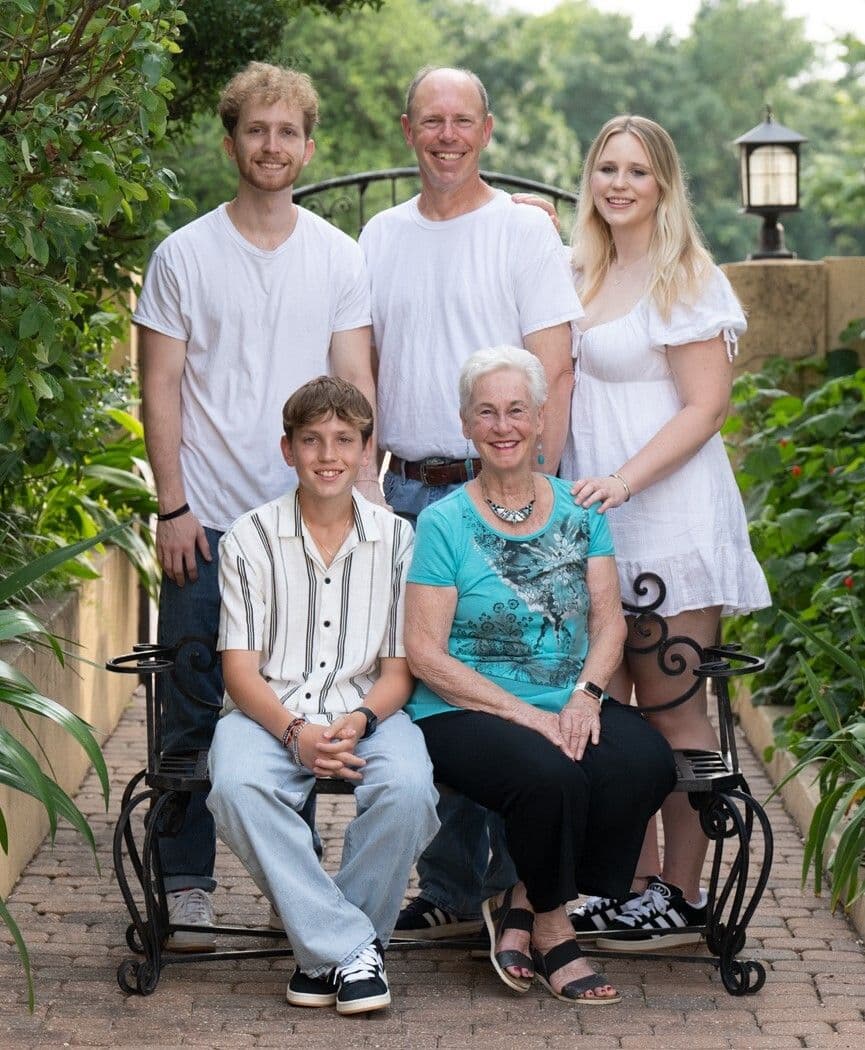
And then, about the third part of your career, you wrote your own book. I read the blurb. It's very inspiring. And I was wondering, since it was also shaped by a very personal experience, if you're comfortable sharing, how did that experience reshape your perspective on success and priorities, or purpose?
Yeah. That's a great question. I was in the thick of career number two, traveling a ton, with a sales and marketing management position for a tech company. My wife was diagnosed with late-stage ovarian cancer when she was giving birth to our third child. It was due to a genetic condition that she had. She fought for three years, but then ultimately passed away. When she passed, I had a nine-year-old, a six-year-old, and a three-year-old at home. A lot changed.
That's when I started teaching, because I needed a job that would keep me home, that would give me summers off, to be able to spend more time with the kids. But seeing that happen, and seeing how hard she fought to stay alive for the three years that she did, you just learn to appreciate life in a very different way. You appreciate how fragile it is, and how important it is for you to tell the people that you love that you care about them on a daily basis—not put off to tomorrow what you could do today. Really make sure that you're making the most of every experience, being mindful of it and appreciating it, just really being in the moment.
That was a huge change for me. We always loved to travel, and we'd make trips whenever we could. But that was the trigger for me to say, I'm traveling as much as I possibly can now, while my kids are still with me. It wasn't like, "Oh, well, we'll travel later." You develop this appreciation for the fact that later, maybe your kids aren't gonna be there, or later, maybe you won't be there, so do it now.
Other than the practical fact that I had to change my career, on a more philosophical and emotional level, it was hugely impactful in terms of changing my mindset to be much more present in the here and now, and focused on getting the most out of every day, and spending the most time and making the most difference for as many people. Life became way less about success and money, and much more about quality time with the people you care about and experiences that are memorable.
It's a very powerful message. Thank you for sharing that. I was also wondering, across all three careers—startup founder, the tech company you worked for, or purpose-driven educator—what's been the most rewarding part of this entire journey for you?
You know, I've thought about it. Everything has been rewarding. The creative process of building companies has been rewarding. But for me, the most rewarding thing is just finding a bunch of different ways to make a difference for others.
Whether it's Aventine Hill Travel, finding a way to give people memories that they cherish for a lifetime. Teaching, finding a way to help students begin their life journey, and fulfill their dreams. I run a nonprofit as well now that helps with children's mental health, who have parents that are going through similar things to what my kids went through with their mom, helping those kids make sure they thrive.
To me, the most gratifying and rewarding thread throughout my life has been finding ways to help people build experiences, build memories, be the best version of themselves, and learn to somehow make a difference for them. I think that's ultimately what I would love my legacy to be. That's what gives me the most gratification: when I hear from a traveler or a student after years, and they say, "You said this, years ago, and I just felt compelled to tell you that it did something for me." That's priceless. To know that you did something that somehow made a difference in somebody else's life, and that they cherish it and remember it, is the most rewarding part of all.
By the way, to connect things, I mentioned Ullman, the professor at St. Stephen's. Ullman gave me gifts that still keep on giving. The passion that he gave me for history and learning has continued to be with me every single day of my life. My kids are students of religion, history, geography and the world because of the gift of passion in this area that Ullman gave to me, and I constantly tell stories about him to my kids. So, that's a pretty good reference point for me.
Do you have any advice for future St. Stephen's students graduating and wanting to become an entrepreneur as well?
I would give two different answers. First, in the moment, it's hard to realize this, but if you have the privilege of going to St. Stephen's, while you're there, realize how special that is. Realize how unique of an opportunity you've been given and how unique of an institution you've been given the opportunity to go to, because the bonds that you'll make with the school, with the teachers, and with the students will last a lifetime. Appreciate it as much as possible.
In terms of just getting out in life, I would just say it's about following your dreams and being really honest about what you love, what you're interested in. Don't follow a path that somebody else prescribes for you. Follow your own path. To me, that's what's been super cool about all the St. Stephen's alums that were in school with me; it's been amazing to see all of the different paths they've taken and all the interesting, amazing things they've done. Considering St. Stephen's is such a small school, people that come out of it go out and do really fascinating, crazy, interesting, amazing things. Just continue to be the legacy. Be that next generation that does the amazing things.